
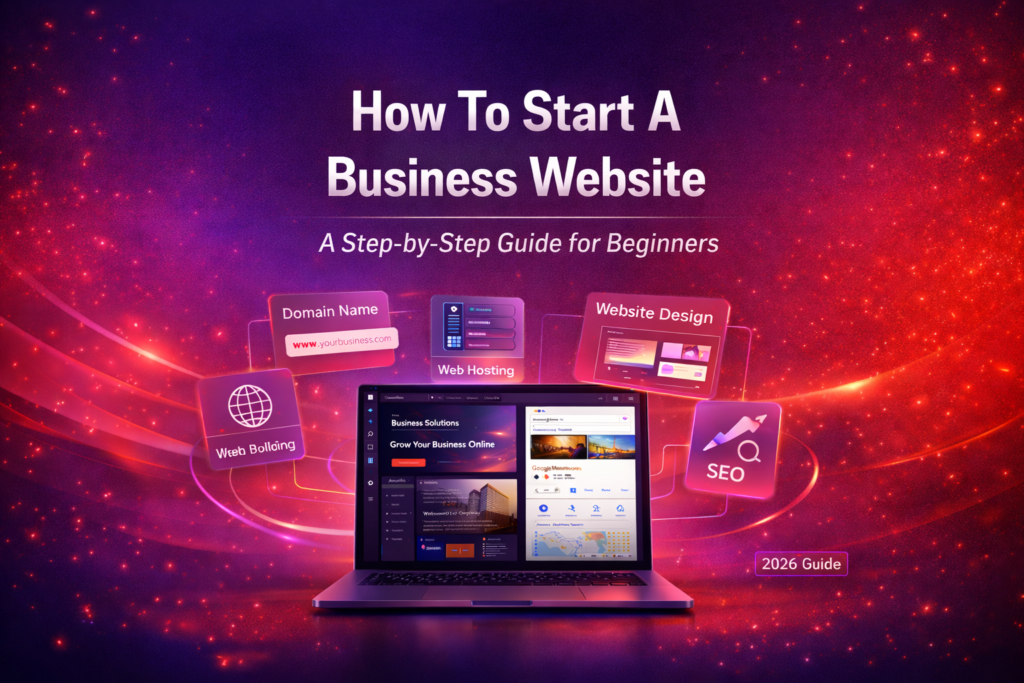
How to Start a Business Website (Step-by-Step Guide for Founders & Small Businesses)
Starting a business website is no longer optional. Whether you’re launching a startup, running a local service in
Pakenham, or scaling an e-commerce brand, your website is your digital headquarters.
At Madexify, we’ve worked with first-time founders, local businesses, and growing brands across Victoria. One thing
is clear: businesses that treat their website as a strategic asset grow faster, scale smoother, and compete stronger.
Here’s how to start your business website the right way.
Step 1: Define the Purpose Before You Design
The biggest mistake new business owners make is jumping straight into design.
Before choosing colors, themes, or platforms, answer this:
- 📌 Is your goal to generate leads?
- 📌 Sell products online?
- 📌 Build credibility?
- 📌 Automate bookings?
- 📌 Educate and convert?
A website without a defined objective becomes an online brochure. A website with strategy becomes a growth engine.
We strongly believe: Design without strategy doesn’t convert.
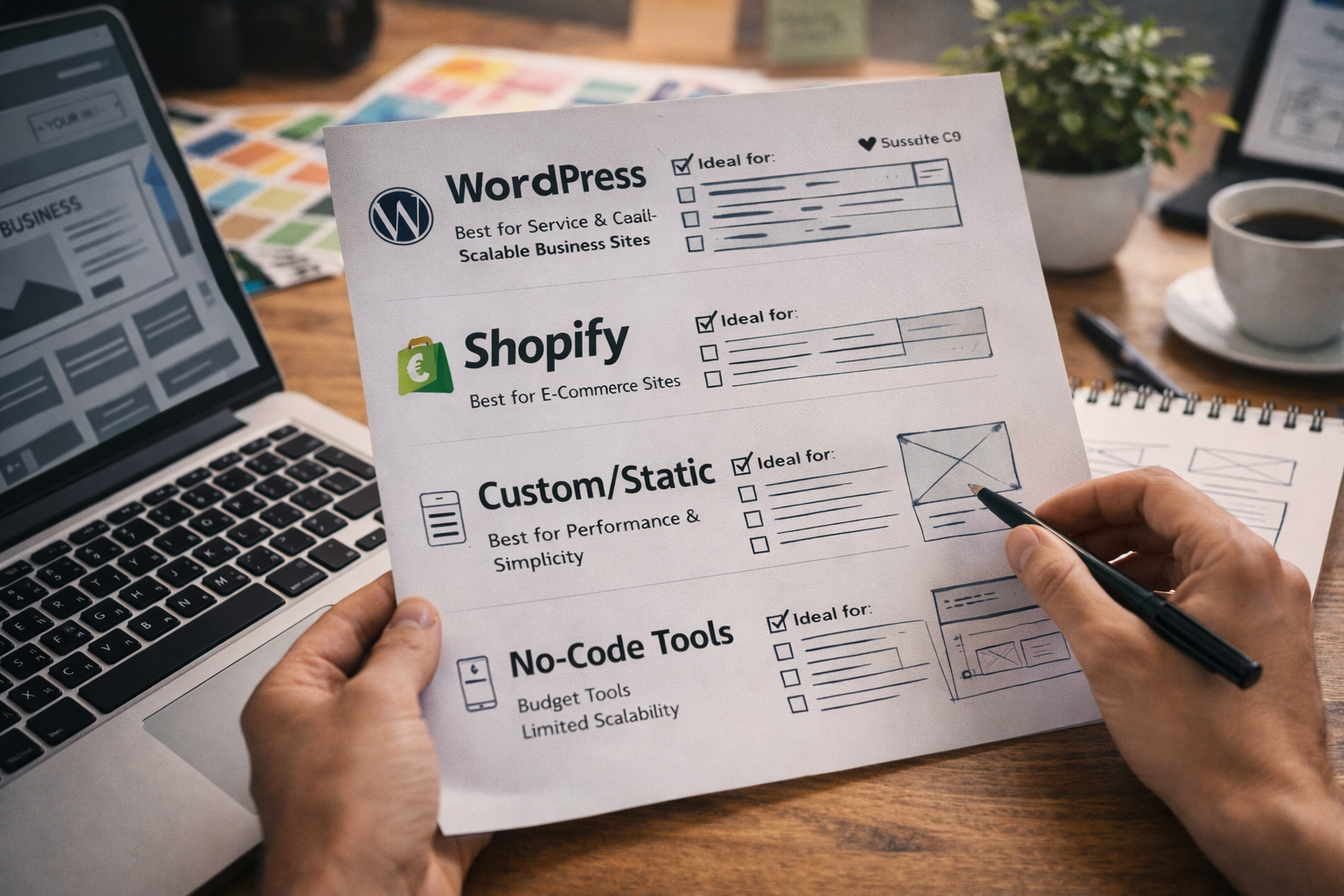
Step 2: Choose the Right Platform
Your platform determines flexibility, scalability, and long-term performance. Here’s a simplified breakdown based on
what we recommend at Madexify:
WordPress – Best for Service & Scalable Business Websites
Ideal for:
- ✅ Local service businesses
- ✅ Consultants and agencies
- ✅ Education and training providers
- ✅ Businesses needing SEO strength
WordPress offers:
- 📌 Full flexibility
- 📌 Strong SEO foundations
- 📌 Scalable functionality
- 📌 Advanced integrations
If you’re a small business in Victoria looking to generate consistent leads, WordPress is often the smartest
long-term investment.
Shopify – Best for E-Commerce & DTC Brands
Ideal for:
- ✅ Product-based businesses
- ✅ Startups launching online stores
- ✅ Brands scaling fast
Shopify provides:
- 📌 Secure payment systems
- 📌 Built-in e-commerce tools
- 📌 Scalable checkout processes
- 📌 Easy product management
If your goal is selling products online, Shopify eliminates technical friction and lets you focus on growth.
Custom / Static Websites – Best for Performance & Simplicity
Ideal for:
- ✅ Startups needing high-speed sites
- ✅ Businesses wanting lightweight performance
- ✅ Portfolio or landing-based websites
Custom builds offer:
- 📌 Faster load times
- 📌 Greater design control
- 📌 Clean architecture
No-Code Tools (When Appropriate)
No-code platforms can work for:
- ✅ Very early-stage founders
- ✅ Budget-conscious startups testing ideas
However, these platforms often have:
- 📌 Limited scalability
- 📌 SEO constraints
- 📌 Design restrictions
They can be useful for validation — but not always ideal for long-term growth.
Step 3: Secure Your Domain & Hosting
Your domain name should be:
- 📌 Short
- 📌 Clear
- 📌 Brand-aligned
- 📌 Easy to remember
For hosting:
- ✅ Choose reliable, fast servers
- ✅ Ensure security certificates (SSL)
- ✅ Prioritize uptime and performance
Website speed directly impacts SEO, conversions, and trust.
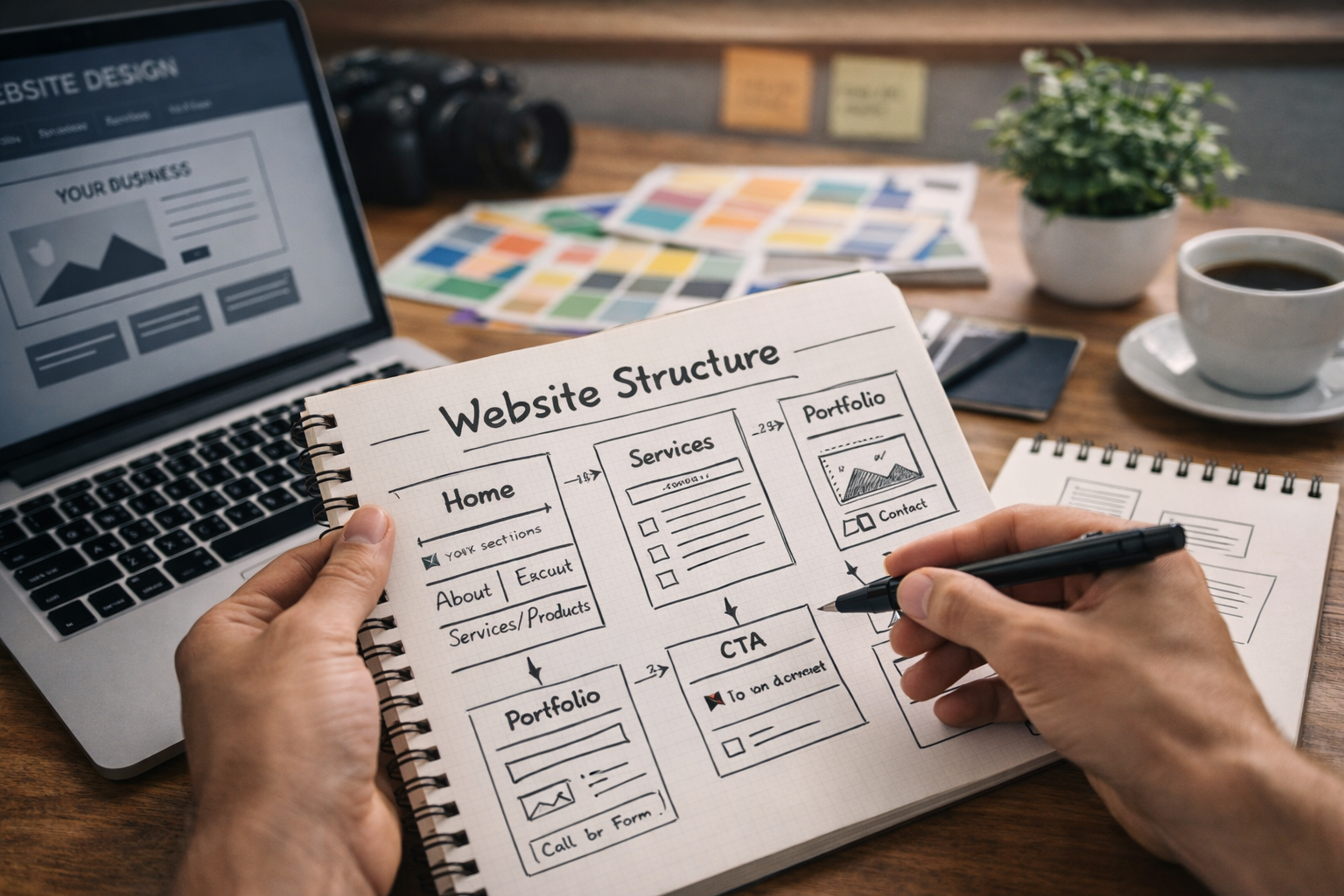
Step 4: Structure Your Website Properly
A strong business website typically includes:
- 📌 Home
- 📌 About
- 📌 Services or Products
- 📌 Portfolio or Case Studies
- 📌 Contact Page
- 📌 Clear Call-to-Action
Common mistakes we see:
- ❌ No clear CTA
- ❌ Overloading features too early
- ❌ Cluttered layouts
- ❌ No mobile optimisation
Mobile-first design is critical.
Step 5: Build With SEO in Mind
Your website needs:
- ✅ SEO-friendly structure
- ✅ Proper headings and content hierarchy
- ✅ Optimised images
- ✅ Fast load speeds
- ✅ Local SEO setup (especially for Pakenham and Victoria-based businesses)
Without SEO foundations, even the best design won’t rank.
Step 6: Focus on Conversion, Not Just Traffic
Your website should:
- 📌 Capture enquiries
- 📌 Collect leads
- 📌 Encourage calls
- 📌 Drive purchases
- 📌 Support automation
This means:
- ✅ Clear buttons
- ✅ Simple forms
- ✅ Logical navigation
- ✅ Trust signals (reviews, testimonials)
A business website is infrastructure — not decoration.
Step 7: Plan for Scalability
Ask yourself:
- 📌 Will this site handle growth?
- 📌 Can I add products later?
- 📌 Can I integrate ads?
- 📌 Can I automate workflows?
Cheap websites often cost more long-term because they require rebuilding within 12–18 months. Scalable systems save
money, time, and stress.
What We See Business Owners Get Wrong
Here are the most common issues:
- ❌ Choosing the wrong platform
- ❌ Ignoring mobile optimisation
- ❌ Building without SEO
- ❌ No defined conversion path
- ❌ Overcomplicating features
- ❌ Underestimating long-term scalability
Technology alone doesn’t guarantee success.
Tech without strategy fails.